0%

China’s furniture fittings industry spans concealed hinges, drawer slides, handles, connectors, and lift systems. These components may be small, but they affect how a cabinet closes, bears weight, and performs after years of use. China’s National Bureau of Statistics reported 655.7 billion yuan in operating revenue for larger furniture manufacturers in 2023. That figure covers furniture manufacturing broadly, not fittings alone. It nevertheless reflects the scale of the industrial environment in which many fittings suppliers operate.

Trade data needs similar care. UN Comtrade’s 2023 furniture and parts categories include finished products, so they cannot provide a precise export ranking for fittings manufacturers. A caveat worth keeping. This article therefore compares manufacturers through practical indicators: product range, material choices, manufacturing capability, quality documentation, customization, and after-sales support. A polished catalogue is not enough. Buyers should ask for load-test results, finish samples, and clear details about tolerances and production lead times. A hinge that looks identical in a photograph may feel very different when fitted to a heavy door.

There is no single, permanent ranking that suits every buyer. Some companies focus on high-volume cabinet hardware; others specialize in premium mechanisms or flexible OEM production. The names discussed here should be assessed against the reader’s product, budget, and quality requirements. Industry statistics offer useful context, but supplier claims still need verification. That distinction is easy to overlook.
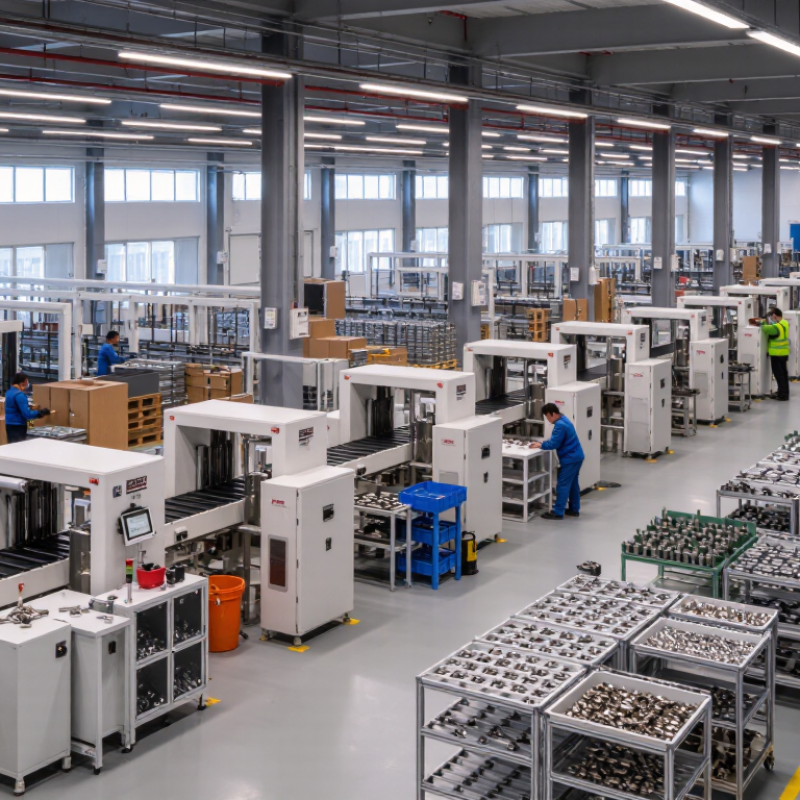
Who Are the Top Furniture Fittings Manufacturers in China?

What Are Furniture Fittings and Where Are They Used?

Furniture fittings are the hardware and small mechanisms that let furniture open, close, move, and stay assembled. Common examples include cabinet hinges, drawer slides, handles, shelf supports, connecting bolts, and adjustable feet. A soft-close hinge controls a cupboard door’s final movement; a full-extension slide lets a drawer reach beyond the cabinet edge. Small parts, big effects.

These fittings appear in kitchens, wardrobes, office desks, beds, and shop displays. In a kitchen, hinges and slides face repeated use, while adjustable feet help level cabinets on uneven floors. Wardrobes often rely on sliding-door rollers and shelf supports. The right choice depends on load, dimensions, material, and expected frequency of use. A fitting may look sturdy but still perform poorly if its measurements or installation are wrong.

For market context, Fortune Business Insights estimated the global furniture market at US$541.52 billion in 2023. That figure covers furniture, not fittings alone, so it indicates the scale of the broader industry rather than hardware demand (Furniture Market Size, Share & Industry Analysis, 2024). When assessing manufacturers in China, buyers can request load ratings, cycle-test details, material specifications, and sample units. Test them in the actual cabinet or drawer design. It is easy to overlook installation tolerances, and catalog descriptions rarely show every real-world complication.

How Are China’s Leading Manufacturers Identified?

A credible shortlist starts with evidence, not a polished catalogue. China’s National Bureau of Statistics reported that furniture manufacturers above the designated-size threshold earned RMB 655.7 billion in 2023, down 4.4% year on year. The figure describes the wider furniture sector, not fittings alone. It does show why a supplier’s production capacity and financial stability deserve checking. China Customs recorded roughly RMB 457.7 billion in exports of furniture and parts that year. Export volume signals experience with demanding buyers, but it cannot prove consistent hinge alignment or drawer-slide durability. Numbers help. They do not decide.

For each manufacturer, compare factory audit records, material specifications, inspection plans, and recent test results. Ask for cycle-test data, corrosion-test conditions, and load limits for the exact fitting model—not a similar product. Check whether the supplier can trace a batch from incoming steel or alloy to final inspection. A useful factory visit includes watching operators measure hole spacing and inspect surface finish under consistent lighting. I would also request records for rejected lots and corrective actions. That question can feel uncomfortable, yet it reveals how problems are handled. No single score captures daily production variation. Even careful audits can miss it. Use the NBS 2023 industrial statistics and China Customs’ 2023 trade data as context, then judge each factory by verifiable product-level evidence.

How to Identify Leading Furniture Fittings Manufacturers in China

A practical supplier-evaluation framework. The percentages are suggested assessment weights—not official statistics or measured rankings.

Compare suppliers using verifiable evidence: product testing and quality controls, relevant certifications, production capability, export experience, and after-sales support. Adjust the weights to fit your product and sourcing requirements.

Which Chinese Furniture Fittings Manufacturers Stand Out?

Chinese furniture fittings manufacturers stand out when they combine precision machining with dependable, repeatable quality. CSIL’s World Furniture Outlook 2024 estimates that China produced about 36% of global furniture in 2022. That scale supports deep supply networks for hinges, drawer slides, connectors, and adjustable legs. But volume alone proves little. Buyers should ask for load-cycle test results, corrosion-resistance details, material specifications, and batch inspection records. A drawer that closes smoothly in a showroom may behave differently after thousands of cycles.

The National Bureau of Statistics reported 2023 revenue of 655.7 billion yuan for China’s furniture manufacturing industry. This figure covers furniture makers, not fittings suppliers, so it should not be treated as a hardware-market total. Still, it indicates the size of the surrounding production base. Strong candidates usually offer stable tolerances, clear technical drawings, and practical customization for cabinet thickness and installation conditions. Request samples from more than one production batch. Check screw alignment and soft-close consistency by hand. Small flaws matter. Export experience and responsive engineering support also help, though polished catalogs can make every factory look equally capable. A site audit or independent quality inspection remains useful.

Who Are the Top Furniture Fittings Manufacturers in China? — Which Chinese Furniture Fittings Manufacturers Stand Out?
Manufacturer Capability Area Common Products Typical Materials Relevant Applications What Buyers Should Evaluate
Hinges and opening systems Concealed cabinet hinges, lift-up stays, and soft-closing mechanisms Steel, stainless steel, and zinc-alloy components Kitchen cabinets, wardrobes, bathroom vanities, and storage furniture Opening angle, door-thickness compatibility, adjustment range, cycle-test results, and corrosion protection
Drawer slides and runners Side-mounted ball-bearing slides, undermount runners, and soft-close drawer systems Cold-rolled steel and stainless steel Kitchen drawers, office storage, bedroom furniture, and commercial cabinetry Rated load, extension type, installation dimensions, closing performance, and tested operating cycles
Furniture connectors Cam locks, dowels, minifix-style connectors, and assembly brackets Steel, zinc alloy, and plastic Flat-pack furniture, panel furniture, shelving, and modular storage Panel thickness fit, joint strength, repeat-assembly performance, machining tolerances, and installation method
Handles and knobs Cabinet pulls, drawer handles, knobs, and recessed pulls Stainless steel, aluminum, zinc alloy, and other metals Cabinet doors, drawers, wardrobes, and office furniture Center-to-center hole spacing, finish consistency, edge quality, corrosion resistance, and mounting hardware
Furniture legs and supports Adjustable feet, table legs, cabinet legs, and leveling glides Steel, aluminum, stainless steel, and plastic Tables, chairs, cabinets, sofas, and kitchen units Load capacity, height adjustment, floor-contact material, stability, and compatibility with the furniture base
Sliding-door hardware Tracks, rollers, guides, and anti-jump components Aluminum track sections, steel rollers, and polymer guides Wardrobes, room dividers, cabinets, and sliding storage doors Door weight and thickness limits, track length, installation clearance, rolling smoothness, and safety features
Surface finishing and quality control Protective and decorative finishes for metal fittings Finishes may include plating, powder coating, or anodizing, depending on the base metal and product Visible hardware and fittings exposed to frequent handling or humid environments Finish uniformity, adhesion, corrosion-test method, inspection records, and consistency between production batches
Export and customization capability Customized dimensions, finishes, packaging, and product assortments Depends on the fitting design and customer specification OEM furniture production, project supply, and international distribution Documented specifications, sample approval, production lead time, traceability, packaging requirements, and applicable compliance documents

This table compares common product categories and supplier evaluation criteria; it is not a company ranking or a claim about any specific manufacturer.

How Do Their Products and Capabilities Compare?

Furniture fittings manufacturers in China differ more by specialization than by a single measure of quality. Some concentrate on hinges, drawer slides, and cabinet connectors, while others offer handles, lift systems, or complete fitting packages. A hinge that feels smooth on a showroom sample may behave differently after months of daily use. Small details matter.

When comparing products, check the materials, finish, load ratings, and adjustment range. Ask whether drawer slides have been tested under repeated opening and closing, and request clear test conditions. A published rating is useful, but it does not tell the whole story. Installation quality and cabinet design also affect performance. That gap matters.

Production capabilities deserve equal attention. A factory with in-house tooling may adapt dimensions or finishes more quickly, while a supplier using outside workshops may offer a broader catalog. Neither arrangement is automatically better. Ask about sample lead times, inspection steps, and how production batches are checked for finish consistency. Samples help, but they cannot represent every shipment. A careful comparison should weigh product performance, customization, communication, and delivery reliability together, while recognizing that no checklist can remove every uncertainty.

What Should Buyers Consider When Choosing a Manufacturer?

When choosing a furniture fittings manufacturer, assess repeatability, not just appearance. Ask for drawings with dimensions and tolerances, then compare them with a production sample. Check the sample. Open and close hinges or drawer slides repeatedly; inspect alignment, noise, and looseness. Request test records for load, operating cycles, and corrosion resistance, with test conditions clearly stated. A certificate alone cannot confirm that a specific fitting will perform well in your cabinet.

The International Organization for Standardization’s ISO Survey 2022 reported about 1.27 million ISO 9001 certificates worldwide. This shows how common quality-management certification is, but certification does not prove product durability. Ask whether inspection records cover incoming materials, in-process checks, and final sampling. Also confirm how defects are recorded and resolved. A useful answer includes actual criteria, not only “we inspect every order.”

Supply reliability deserves equal attention. The World Bank’s 2023 Logistics Performance Index ranked China 19th, with a score of 3.7 out of 5. This national result offers context, not a guarantee about an individual factory. Verify lead times against recent orders, clarify packaging and replacement-part arrangements, and request references for similar fittings. If a quotation is unusually low, compare steel thickness, finish, and test scope line by line. I would still leave room for doubt: a neat sample may not represent every production batch.

FAQS

What are furniture fittings?

They are small hardware parts that help furniture open, close, move, and stay assembled. Examples include hinges, drawer slides, handles, shelf supports, bolts, and adjustable feet. Small parts matter.

Where are furniture fittings commonly used?

You can find them in kitchens, wardrobes, office desks, beds, and shop displays. A kitchen cabinet may use hinges, drawer slides, and adjustable feet together.

How do soft-close hinges and full-extension slides work?

A soft-close hinge slows a cupboard door near the end of its movement. A full-extension slide lets a drawer pull out beyond the cabinet edge.

How should buyers choose suitable fittings?

Compare the load, dimensions, material, and expected frequency of use. Check that the fitting suits the cabinet thickness and installation space. Measurements can be easy to miss.

What should buyers request from manufacturers?

Ask for load ratings, cycle-test details, material specifications, and sample units. Batch inspection records can also help show whether quality stays consistent.

Why should fittings be tested in the actual furniture design?

A sample may work well on a table but behave differently inside a cabinet. Test drawer movement, screw alignment, and door closing in the intended setup.

What does China’s furniture production scale tell buyers about fittings?

China produced about 36% of global furniture in 2022, according to an industry estimate. This suggests a broad supply network, but it does not prove any supplier’s quality.

Are catalogs and showroom samples enough to judge a supplier?

Not always. A showroom drawer may feel smooth before thousands of cycles. Compare samples from different batches, and consider an independent quality inspection. I might still overlook a small installation tolerance.

Conclusion

This article explores the role of Furniture Fittings in everyday furniture, from hinges, drawer slides, and handles to connectors and support components used in homes, offices, and commercial spaces. It explains how manufacturers can be assessed through factors such as product range, material quality, production capacity, customization options, quality-control processes, and ability to meet different project requirements.

Rather than focusing on brand names, the article compares the capabilities and product offerings commonly found among China’s leading manufacturers. It also offers practical guidance for buyers, including how to evaluate durability, precision, compatibility, lead times, communication, and after-sales support. By considering these factors together, buyers can make a more informed choice and find a manufacturing partner whose products and services suit their budget, design needs, and expected standards.

Amelia

Amelia

Amelia is a dedicated marketing professional with a strong understanding of product strategy, customer needs, and effective communication. With extensive experience in researching market trends and developing clear, practical content, she regularly contributes expert articles to the company’s......