Choosing Door Hardware is not merely a finish decision. A lever that feels comfortable in the hand, a latch that catches cleanly, and a closer that shuts without a slam can shape how a doorway works every day. Small parts matter.
The 2024 U.S. Houzz & Home Study reported a $24,000 median renovation spend for U.S. homeowners who renovated in 2023. That broader investment figure makes durability worth considering alongside appearance. The National Kitchen & Bath Association’s 2024 Kitchen Trends Report also identifies accessibility and aging-in-place as ongoing design priorities. For a project, that can mean checking whether a lever is easier to operate than a round knob, especially on a frequently used or accessible route. These reports offer useful context, not a specification for any one building.
Start by matching the hardware to the door’s use, material, traffic, and exposure. A busy entry may need a different lock and finish from a quiet bedroom door. Check the door thickness, handing, latch dimensions, and any required fire or accessibility criteria before ordering. For locks, compare the product’s ANSI/BHMA performance information and confirm the tested grade applies to that specific model. A polished finish can still be the wrong choice if it shows wear quickly or feels slippery with wet hands. And a higher grade alone does not guarantee a good fit. The best selection balances function, durability, installation details, and the people who will use the door.
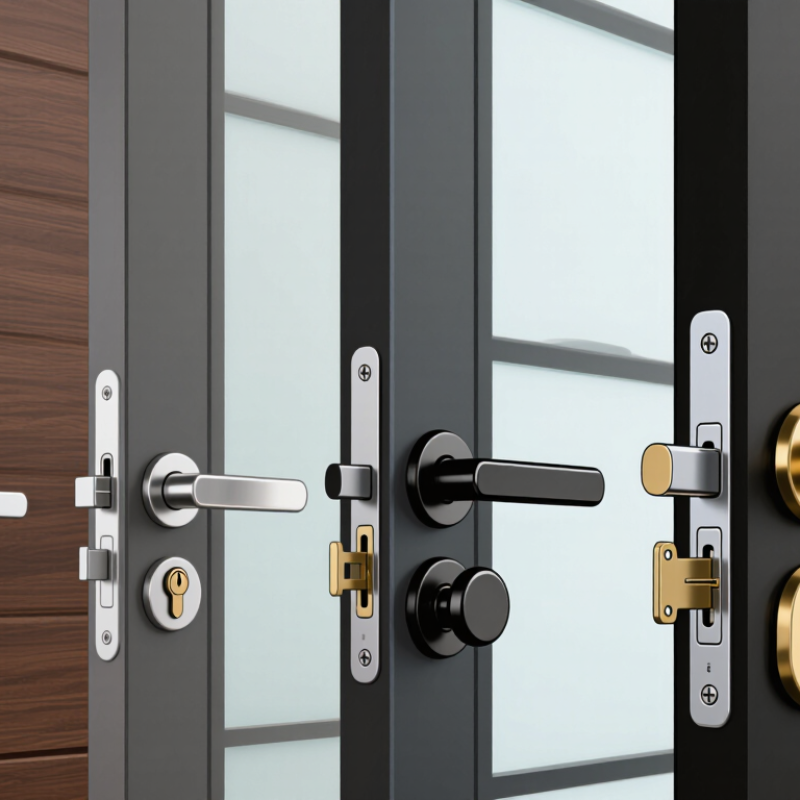
Identify the Main Types of Door Hardware
Door hardware includes the parts people touch and the components that support or secure a door. Lever handles suit busy spaces because they are easy to operate with an elbow or a full hand. Knobs take less space, though they can be harder to turn for some users. Passage sets have no lock, making them practical for closets and hallways. Privacy sets add a simple lock for bedrooms or bathrooms. Keyed entry sets and deadbolts provide a stronger locking function at exterior doors; they are often used together.
Hinges carry the door’s weight, so match their size and quantity to the door’s dimensions and expected use. A closer controls how a door shuts, while a stop helps prevent the handle from striking a wall. Pull handles are common on sliding or commercial doors where a latch may not be needed. Small details matter. Before ordering, check the door thickness, handing, and existing bore holes against the hardware specifications. A finish sample can also look different under warm hallway lights than in a showroom. It is easy to underestimate that difference, and replacing mismatched parts can add time to a project.
How to Choose the Best Door Hardware for Your Project? — Identify the Main Types of Door Hardware
| Hardware Type | Main Purpose | Common Applications | Key Selection Considerations |
|---|---|---|---|
| Door Knobs | Operate a latch by turning a rounded knob. | Interior rooms and some exterior doors. | Consider grip comfort, door thickness, backset, and whether the knob needs a passage, privacy, keyed-entry, or dummy function. |
| Door Levers | Retract a latch using a lever handle. | Interior and exterior doors; often useful where hands-free or easier operation is preferred. | Check handing, clearance from nearby walls, accessibility needs, and the required lock function. Lever return and projection should suit the space. |
| Deadbolts | Provide a separate locking bolt that does not spring back like a standard latch. | Exterior entry doors, commonly used with a knob or lever. | Verify door thickness, backset, bore preparation, strike alignment, and whether the lock is single-cylinder or double-cylinder. Local safety rules may apply to double-cylinder locks. |
| Handlesets | Combine an exterior grip or handle with a keyed lock, usually paired with an interior lever or knob. | Main residential entrance doors. | Confirm the door's handing, thickness, hole spacing, backset, and compatibility with the existing door preparation. |
| Mortise Locks | House the lock case inside a pocket cut into the door edge; one lock body can combine latching and locking functions. | Commercial buildings and some residential doors. | These require a compatible mortise pocket and door preparation. Check lock function, handing, cylinder type, and the door's existing dimensions. |
| Passage, Privacy, Keyed-Entry, and Dummy Sets | Describe the operating function of a knob or lever: passage has no lock, privacy locks from inside, keyed-entry locks with a key, and dummy hardware does not latch. | Passage: hallways and closets; privacy: bathrooms and bedrooms; keyed-entry: exterior doors; dummy: inactive or decorative door leaves. | Choose the function based on the room and security need. Privacy locks are not a substitute for exterior security locks. |
| Hinges | Connect the door to its frame and allow it to swing. | Nearly all hinged doors. | Match hinge size, leaf thickness, finish, screw pattern, door weight, and frame preparation. Heavy or frequently used doors may require appropriately rated hinges. |
| Door Closers | Control a door's closing speed and help return it to the closed position. | Commercial entrances, corridors, and doors that must close reliably. | Check door width and weight, mounting arrangement, opening angle, and any accessibility or fire-door requirements. Installation and adjustment affect performance. |
| Panic or Exit Devices | Allow occupants to open a door by pressing a horizontal bar or touchpad. | Many commercial exit doors and locations with regulated egress requirements. | Confirm door width, handing, single- or double-door configuration, frame compatibility, and applicable building and fire codes. |
| Door Stops and Holders | Limit door swing or hold a door open where appropriate. | Interior doors, corridors, and service areas. | Choose a floor-, wall-, or hinge-mounted style based on the door's swing, nearby surfaces, traffic, and trip hazards. Hold-open devices may be restricted on fire doors. |
| Kick Plates and Push Plates | Protect the door surface or provide a durable area to push against. | High-traffic commercial and institutional doors. | Measure the door face and confirm the plate will not interfere with glazing, hardware, or door seals. Select a material and finish suitable for the environment. |
FAQS
Lever handles are easy to operate with a full hand or elbow. Knobs take less space but may be harder to turn.
Passage sets have no lock and suit hallways or closets. Privacy sets add a simple lock for bedrooms and bathrooms.
Keyed entry sets and deadbolts provide stronger locking functions. They are often used together.
Match hinge size and quantity to the door’s weight, dimensions, and expected use. A heavy wood door has different needs.
Check door thickness, swing direction, frame condition, bore holes, and screw locations. Measure twice.
A finish sample may look different under warm hallway lighting than in a showroom. I might underestimate that difference.
Yes. A closer controls how the door shuts, while a stop helps keep the handle from striking a wall.
Durable components and a closer can help with frequent use and slamming. Moisture-resistant finishes may reduce corrosion in damp spaces.
Not necessarily. Check the door and frame directly, then compare measurements with the product specifications. I would not assume old holes will fit.
Conclusion
Choosing the right Door Hardware begins with understanding the available options, such as handles, knobs, hinges, locks, and closers, and identifying what the project actually requires. Consider the door’s type, size, location, frequency of use, and the needs of the people who will use it. These factors help determine which hardware will provide a practical fit rather than simply looking appealing.
Next, compare materials and finishes for durability, upkeep, and suitability for the surrounding environment. Evaluate security, accessibility, and ease of operation, especially for doors used often or by people with different mobility needs. Before making a final choice, confirm that each component is compatible with the door and frame, check installation requirements, and consider how much maintenance it will need over time. A careful assessment of these details can help create a door setup that is dependable, comfortable, and well suited to the project.