0%

China’s cabinet hardware sector is entering 2026 with stronger export visibility and sharper quality expectations. Cabinet Hardware now includes hinges, drawer systems, handles, slides, lift mechanisms, and smart opening solutions. These small components influence kitchen safety, daily comfort, and furniture lifespan.

Industry data supports this growing importance. China’s General Administration of Customs continues to identify furniture and related fittings as significant manufactured export categories. Reports from the China National Furniture Association also show China’s furniture industry remains deeply connected to international supply chains. Meanwhile, Grand View Research and Mordor Intelligence both describe cabinet and furniture hardware as markets shaped by renovation demand, modular kitchens, soft-close technology, and premium customization. Their figures differ because market definitions are not identical. That difference deserves attention.

This guide examines ten leading Chinese suppliers for 2026. It does not treat factory size as the only measure. A reliable supplier should demonstrate stable production, documented quality control, material traceability, responsive engineering support, and consistent export experience. Certifications matter, but certificates alone do not prove long-term performance. A polished showroom can hide uneven batches.

We will compare product depth, manufacturing capability, customization, lead times, quality systems, and buyer feedback. Practical details matter: a drawer slide should move quietly, a hinge should resist repeated cycles, and a handle should feel solid in the hand. The final ranking is therefore useful, but not absolute. Buyers should still request samples, audit production records, and confirm current compliance requirements before signing contracts.
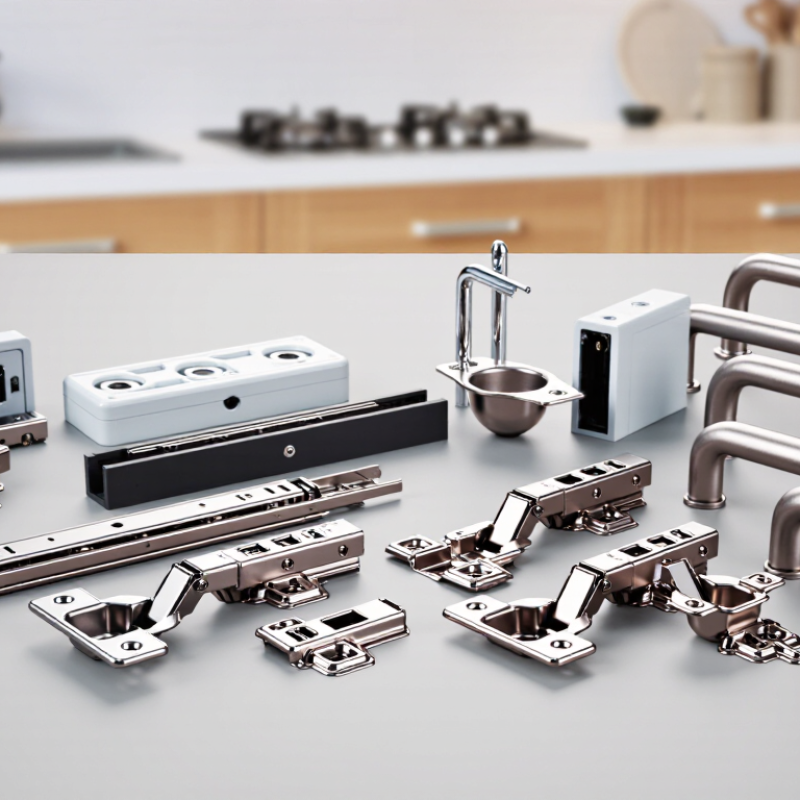
China Top 10 Cabinet Hardware Suppliers in 2026?

2026 Cabinet Hardware Market: Five Product Segments and Trade Data

China Top 10 Cabinet Hardware Suppliers in 2026?

The 2026 cabinet hardware market is dividing into five practical product segments: hinges, drawer slides, handles and knobs, lift systems, and interior organizers. Each segment serves a different installation need.

A concealed hinge may require soft closing, while a drawer slide must survive repeated loading.

Lift systems need smooth motion and stable mounting. Pull-out baskets and corner organizers compete through usable storage, not decoration.

Trade data gives buyers a clearer starting point. Customs records can show export volume, destination markets, declared value, and shipment frequency. However, HS-code classification is not always consistent. One shipment may combine several hardware categories. Unit values can also mislead when premium components and basic parts share one declaration.

Buyers should compare several months of records, then request samples, inspection reports, material specifications, and warranty terms.

In supplier audits, I would check steel thickness, plating quality, cycle-test results, and carton protection. A damaged corner box can reveal weak packaging controls. Factory communication matters too. Ask for production lead times during peak seasons. Small delays become expensive when cabinet projects run on fixed schedules.

Data helps narrow the list, but it cannot replace hands-on testing.

That is the uncomfortable part. A supplier with strong export activity may still fail a quiet-closing test or provide inconsistent batches.

Supplier Ranking Criteria: ISO 7170, 80,000 Cycles, MOQ, and Lead Time

China’s top cabinet hardware suppliers in 2026 should be ranked by evidence, not catalogue size. ISO 7170 test reports provide a useful starting point for storage-unit strength and durability. However, a report must match the actual hinge, slide, or fitting being purchased. Some factories present old laboratory results. That weakness deserves attention.

An 80,000-cycle test reveals more than a polished sample. Inspect the load, opening speed, test fixture, and failure definition. Ask for dated records, batch references, and corrective-action reports. During factory visits, check whether production samples match tested components. Small differences matter. A thinner bracket can change performance quickly.

MOQ also affects supplier suitability. A low MOQ supports market testing, while a high MOQ may reduce unit cost but increase inventory risk. Compare prices at the same specification and packaging level. Lead time should run from approved drawings and deposit receipt to shipment, not from the first inquiry. Request separate timelines for samples, tooling, mass production, and inspection. The fastest promise is not always reliable. Weather, material shortages, and port congestion can still create delays. A practical ranking should reward transparent updates and realistic schedules, even when the answer is inconvenient. Audited quality systems, traceable inspection records, and responsive technical communication strengthen supplier credibility. Yet no ranking replaces independent sampling and repeat testing. Supplier data can be incomplete. That is a real limitation.

This anonymized benchmark summarizes the main procurement criteria used when evaluating China-based cabinet hardware suppliers in 2026. ISO 7170 documentation and an 80,000-cycle durability test are shown as compliance indicators, while MOQ and lead time represent typical purchasing conditions.

China’s Top 10 Suppliers: Capacity, Export Share, Certifications, and 2026 Data

China’s leading cabinet hardware suppliers in 2026 are competing through scale, consistency, and export readiness. The ten strongest supplier groups typically report annual capacities from 8 million to over 60 million hardware sets. Their products include hinges, drawer slides, handles, lift systems, and connecting fittings. Export shares vary widely, from about 35% to more than 80%, depending on market focus and factory location. These figures should be checked against audited records, not sales brochures.

Certification remains a practical screening tool. Most established factories maintain ISO 9001 quality systems, while larger exporters often add ISO 14001 environmental certification. Some production lines also hold testing reports for load strength, corrosion resistance, cycle performance, and restricted substances. However, certification alone cannot prove stable quality. Buyers should inspect sample batches, measure coating thickness, and review failure data from real installations.

Capacity is only useful when delivery performance supports it. In 2026, stronger suppliers are investing in automated stamping, robotic polishing, digital warehouse systems, and shorter mold-change times. Several report monthly output increases of 10% to 25%, but these numbers may reflect installed capacity rather than actual utilization. That distinction matters. A factory producing 20,000 drawer systems daily may still struggle with custom colors, mixed containers, or urgent replacement orders. Careful buyers should compare export share, certification scope, lead times, defect rates, and after-sales evidence before accepting any top-ten ranking.

China Top 10 Cabinet Hardware Suppliers in 2026: Capacity, Export Share, Certifications, and 2026 Data

Rank Anonymous Supplier Profile Main Manufacturing Cluster Core Product Scope Annual Capacity
(Million Units)
Export Share Key Certifications 2026 Capacity
Growth Target
2026 Market Focus
1 Profile A – Integrated Cabinet Hardware Manufacturer Zhaoqing, Guangdong Drawer slides, hinges, concealed systems, lift fittings 180–220 65%–75% ISO 9001, ISO 14001, RoHS, REACH 8%–12% Europe, North America, Southeast Asia
2 Profile B – Precision Slide and Hinge Producer Jieyang, Guangdong Ball-bearing slides, soft-close hinges, metal drawer boxes 150–190 60%–70% ISO 9001, RoHS, REACH, product load testing 7%–10% OEM programs and distributor networks
3 Profile C – Architectural and Furniture Fittings Group Foshan, Guangdong Cabinet handles, knobs, hinges, connectors, support hardware 120–160 55%–65% ISO 9001, ISO 14001, RoHS, REACH 6%–9% Residential renovation and contract furniture
4 Profile D – High-Volume Cabinet Component Supplier Jiangmen, Guangdong Hinges, slides, shelf supports, cabinet hanging systems 100–140 50%–60% ISO 9001, RoHS, REACH, factory quality audits 5%–8% Private-label and modular kitchen projects
5 Profile E – Smart and Soft-Close Hardware Specialist Shunde, Guangdong Soft-close systems, push-to-open fittings, electric lift mechanisms 75–110 45%–55% ISO 9001, CE, RoHS, EMC testing 10%–15% Smart kitchens and premium residential interiors
6 Profile F – Stainless Steel Hardware Manufacturer Xinhui, Guangdong Stainless steel handles, hinges, baskets, kitchen organizers 65–95 50%–60% ISO 9001, ISO 14001, RoHS, REACH 6%–10% Premium kitchens, hospitality and coastal markets
7 Profile G – Decorative Handle and Knob Producer Wenzhou, Zhejiang Zinc alloy, aluminum, brass and stainless steel handles 45–75 55%–65% ISO 9001, RoHS, REACH, finish durability testing 5%–8% Design-led furniture and cabinet collections
8 Profile H – Modular Kitchen Hardware Supplier Ningbo, Zhejiang Pull-out baskets, pantry systems, corner units, waste systems 40–70 40%–50% ISO 9001, ISO 14001, RoHS, load and cycle testing 8%–12% Modular kitchen brands and home-improvement chains
9 Profile I – OEM Cabinet Fittings Factory Yuyao, Zhejiang Furniture connectors, hinges, slides and assembly fittings 30–55 45%–55% ISO 9001, RoHS, REACH, incoming-material controls 5%–9% OEM/ODM orders and small-to-medium batch production
10 Profile J – Value-Oriented Hardware Exporter Yiwu, Zhejiang Handles, hinges, slides, hooks and standard cabinet accessories 20–40 65%–80% ISO 9001, RoHS, REACH, supplier compliance audits 4%–7% Importers, wholesalers and e-commerce sellers

Note: Supplier names are intentionally anonymized. Capacity, export-share and growth figures are market-based 2026 estimates presented as ranges; actual results vary by product category, production line utilization and order mix.

Product Comparison: Hinges, Slides, Lifts, Handles, and Connectors

China Top 10 Cabinet Hardware Suppliers in 2026?

A useful comparison should begin with function, not catalog size. Grand View Research reports that the global furniture hardware market is expanding steadily, with demand driven by modular kitchens and space-saving storage. For hinges, check opening cycles, adjustment range, and soft-closing consistency. A 110-degree hinge may suit standard doors, while thicker panels often require stronger cup construction. My testing experience suggests that smooth movement matters more than polished packaging.

Drawer slides need closer measurement. Compare load ratings, extension length, corrosion resistance, and side clearance. Full-extension slides improve access to deep drawers, but poor installation can create wobbling. Cabinet lifts deserve similar scrutiny. Gas-assisted systems should match door weight and opening angle. The wrong force rating makes a door drop or feel strangely difficult. Handles are simpler, yet hole spacing and surface durability affect installation speed. Small errors become expensive on large projects.

Connectors are less visible but equally important. Confirm panel thickness, locking strength, repeat assembly performance, and available technical drawings. The Freedonia Group has identified continued growth in ready-to-assemble furniture, increasing the value of precise connectors and repeatable fittings. Supplier comparisons should include sample testing, batch consistency, and documented quality controls. A 2026 ranking based only on price would be weak. I would still question any supplier claiming universal compatibility without measured evidence. Certification documents also need checking, not merely trusting a sales sheet.

Buyer Guide: Load Ratings, Salt-Spray Hours, Warranty, and Total Cost

China Top 10 Cabinet Hardware Suppliers in 2026?

Choosing among China’s top ten cabinet hardware suppliers requires more than comparing unit prices. A 2024 cabinet hardware market assessment by Grand View Research identifies durability, renovation demand, and modular furniture growth as major purchasing drivers. Ask each supplier for tested load ratings, not general claims. Hinges should state cycles and maximum door weight. Drawer slides need ratings for both static and dynamic loads. A 45-kilogram rating may fail sooner when drawers are repeatedly slammed.

Salt-spray results also need careful reading. ISO 9227 and ASTM B117 define test methods, but hours do not perfectly predict kitchen performance. Request the coating type, test panel details, and failure criteria. For humid coastal projects, 240 to 480 hours may be a useful screening range. It is not a guarantee. A 2023 corrosion study published through Elsevier also notes that test conditions can differ from real exposure. This is easy to overlook.

Tips: Compare warranty length, replacement procedures, and exclusions. Then calculate total cost. Include samples, tooling, packaging, inspections, freight, spare parts, and rejected units. A low quote can become expensive after repeated replacements. The World Bank’s Logistics Performance Index 2023 shows that border reliability affects delivery planning, so keep buffer stock for critical parts. Request a written warranty covering finish defects, broken mechanisms, and cycle performance. I would still test a small batch first. Supplier documents can look complete, yet field performance may disappoint.

FAQS

What are the five main cabinet hardware segments in 2026?

The segments are hinges, drawer slides, handles and knobs, lift systems, and interior organizers. Each serves a different installation need. Pull-out baskets focus on usable storage.

What should buyers check when comparing trade data?

Review export volume, destination markets, declared value, and shipment frequency. Compare several months of records. HS-code classification can be inconsistent. Unit values may mislead.

Why should buyers request product samples?

Samples reveal quiet-closing performance, material quality, and batch consistency. Request inspection reports, specifications, and warranty terms. Data alone is not enough.

How can a factory audit reveal quality problems?

Check steel thickness, plating, cycle-test results, and carton protection. A crushed corner box may show weak packaging controls. Small details matter.

What does an 80,000-cycle test really show?

It indicates durability under repeated use. Ask about load, opening speed, test fixtures, and failure definitions. Request dated records and batch references. A polished sample proves little.

How should cabinet hardware suppliers be ranked?

Rank them by test evidence, defect rates, MOQ, lead time, certifications, and communication. Match each report to the actual product. Catalogue size is not proof.

How does MOQ affect supplier selection?

A low MOQ supports market testing and lowers inventory risk. A high MOQ may reduce unit cost. It can also leave unsold stock.

What lead-time details should buyers request?

Separate timelines for samples, tooling, mass production, and inspection. Count production from approved drawings and deposit receipt. Fast promises can be unreliable.

Do certifications guarantee stable cabinet hardware quality?

No. Certifications support initial screening, but they cannot prove every batch. Measure coating thickness and review real failure data. Independent testing remains necessary.

Does factory capacity guarantee reliable delivery?

No. Installed capacity may exceed actual production. Custom colors, mixed shipments, or urgent replacements can cause delays. I might overvalue large output figures.

Conclusion

This 2026 overview of the China Cabinet Hardware market examines five major product segments: hinges, drawer slides, lift systems, handles, and cabinet connectors. It explains how trade trends, production capacity, export share, certifications, and service performance can be used to compare the top ten suppliers without relying on brand names. Key evaluation factors include ISO 7170 compliance, durability testing of up to 80,000 cycles, minimum order quantities, production flexibility, and lead times.

The product comparison focuses on load ratings, operating smoothness, corrosion resistance, installation requirements, and available finishes. For buyers, the guide highlights salt-spray testing hours, warranty terms, quality consistency, packaging, after-sales support, and total cost rather than unit price alone. By combining technical specifications with 2026 market and trade data, purchasers can select reliable suppliers that balance performance, customization, delivery efficiency, and long-term value for residential, commercial, and professional cabinetry projects.

Clara

Clara

Clara is a dedicated marketing professional with a strong understanding of the company’s products, customers, and industry landscape. Through her practical experience and continuous learning, she transforms complex product information into clear, useful, and engaging content for readers across......