Choosing reliable furniture hardware suppliers can shape a product’s quality, lifespan, and customer experience. A smooth drawer slide, quiet hinge, or well-finished handle may seem minor. In practice, these components influence assembly time, daily performance, and warranty concerns. This guide explores 10 Best Furniture Hardware Suppliers for Global Buyers, with attention to practical purchasing needs.
The evaluation considers product range, material quality, load ratings, surface finishes, customization, minimum order quantities, and production capacity. It also examines sample support, packaging standards, delivery consistency, and communication across time zones. Buyers should look for clear technical data, responsive service, and evidence of quality control. Factory audits, test reports, and customer references can provide useful confidence. Still, documents alone do not guarantee perfect results. Samples matter.
Small details often reveal larger problems. A drawer runner may feel smooth in a showroom but weaken after repeated use. A brass-colored handle may lose its finish in humid conditions. Packaging can also fail during long-distance shipping. These risks deserve careful review before a purchase agreement. No supplier is perfect. Even experienced buyers can overlook a hidden cost or unclear tolerance. This comparison aims to support better decisions through practical observations, not exaggerated promises. It highlights suppliers that may suit different budgets, furniture categories, and sourcing strategies. Buyers should still confirm current specifications, compliance requirements, production schedules, and commercial terms directly with each supplier. Fresh verification is essential.
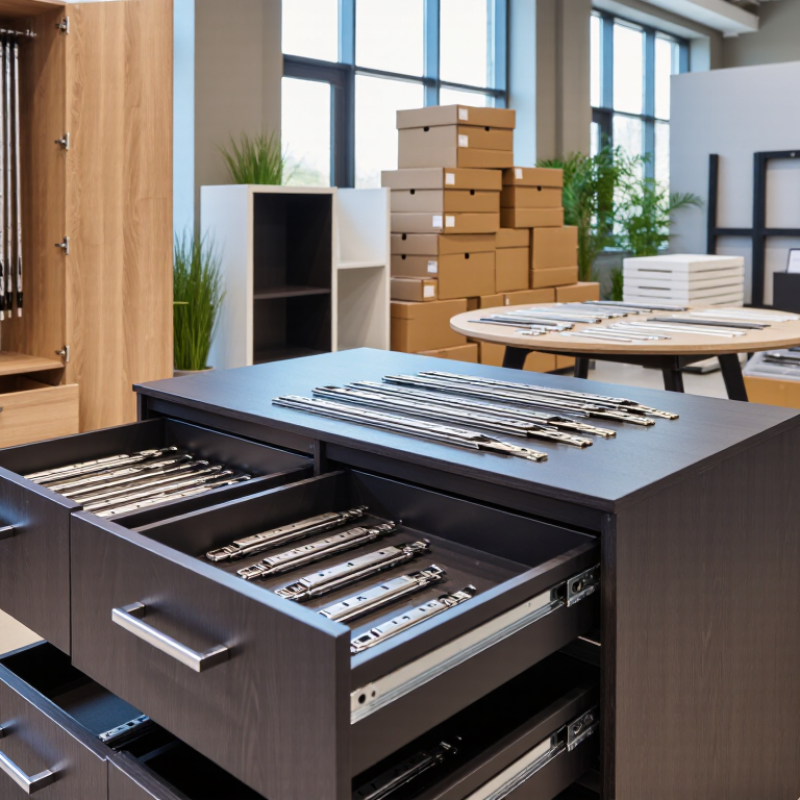
Global buyers searching among the 10 best furniture hardware suppliers should evaluate more than catalog size or low prices. A reliable supplier explains material grades, surface treatments, load limits, and testing methods clearly. Ask for recent product samples, not only polished photographs. Check hinge movement, drawer slide noise, screw alignment, and coating consistency under normal use. These details reveal manufacturing discipline.
Request a complete quotation with tooling fees, minimum order quantities, packaging standards, lead times, and replacement policies. Strong suppliers provide traceable quality records and respond with specific answers. Visit the factory when possible, or arrange a live video inspection of production and storage areas. I have found that fast communication does not always mean dependable service. One supplier may answer within minutes but overlook a tolerance issue. That mistake can become expensive after shipment.
Tips: Compare at least three suppliers using the same checklist. Test samples in realistic furniture panels. Confirm carton labels and packing photos before production. Ask how rejected parts are separated and recorded. Review payment terms carefully. Keep written approval for every specification. A perfect score is rare. Leave room for honest improvement, because even experienced suppliers can miss a detail. Reliable cooperation grows through evidence, repeated checks, and practical conversations—not attractive promises alone.
Supplier One specializes in concealed hinges, offering smooth movement and adjustable closing resistance.
Supplier Two focuses on drawer slides, with full-extension rails for kitchens and office cabinets.
Supplier Three supplies cabinet handles in steel, aluminum, and zinc alloys. Its strength is finish consistency across large orders.
Supplier Four develops lift systems for overhead doors, supporting controlled opening in compact kitchens.
Supplier Five produces connecting fittings, including cam locks and dowels for knock-down furniture.
Supplier Six serves commercial projects with heavy-duty casters, adjustable feet, and reinforced brackets.
Supplier Seven offers soft-close systems, helping reduce slamming and daily wear. Quiet operation matters.
Supplier Eight focuses on wardrobe hardware, such as sliding-door rollers, tracks, and hanging rails.
Supplier Nine provides fasteners and installation accessories, with practical packaging for assembly teams.
Supplier Ten combines custom machining with small-batch production, useful for unusual cabinet dimensions.
From my sourcing experience, reliable suppliers explain load ratings, material grades, salt-spray results, and installation limits clearly. They also provide samples before mass production. A polished catalog is not enough. I once saw attractive handles develop uneven plating after repeated cleaning, so finish testing deserves attention. Buyers should compare tolerance control, replacement support, packaging strength, and delivery records. Local compliance requirements may differ, and assumptions can create costly rework. No supplier wins every category. The best choice depends on furniture weight, usage frequency, climate, and installation skill.
Global buyers should compare furniture hardware suppliers through quality, price, certification, and capacity. Cheap is rarely cheap. Grand View Research valued the global furniture market at approximately USD 516.66 billion in 2022, with continued growth expected through 2030. That scale increases pressure on suppliers, but it does not guarantee consistent hardware. Request production samples, dimensional drawings, material grades, and tolerance records. A drawer slide that feels smooth today may loosen after repeated loading.
Certification checks should be practical, not decorative. The ISO Survey 2022 recorded more than 1.26 million ISO 9001 certificates worldwide. However, certification alone cannot prove every batch meets your specification. Verify the certificate number, issuing body, scope, and renewal date. For metal components, ask for salt-spray results, coating thickness, hardness data, and corrosion photographs. FSC’s 2023 facts and figures reported over 160 million hectares of certified forest area, useful when evaluating wood-based packaging or components. Still, documentation can be incomplete.
Pricing needs a common calculation. Compare unit cost, tooling, packaging, inspection, freight, and defect replacement terms. Ask suppliers to quote identical annual volumes. Capacity should include monthly output, machine availability, lead time, and backup production lines. Industry reports often show market growth, but factory figures are self-reported. I would treat impressive capacity claims cautiously. A smaller supplier with traceable records may outperform a larger factory during peak seasons. That is an uncomfortable point. Perfect comparisons do not exist.
Selecting among the 10 best furniture hardware suppliers requires more than comparing unit prices. Global buyers should examine export experience, customization control, and minimum order requirements. A reliable supplier should provide clear quotations, packing specifications, lead times, and shipping terms. Ask whether invoices, packing lists, certificates, and customs data are prepared consistently. Small errors can delay a container. Request recent export references, factory photos, and a sample shipment record when possible. But documents alone do not prove performance.
Customization deserves a measurable process. Confirm drawings, surface finishes, hole spacing, material grades, color codes, and tolerance limits before sampling. A capable technical team should explain what can be modified without weakening the fitting. For drawer slides, hinges, handles, and connectors, test samples under realistic loads. Record approval dates and revision numbers. One common mistake is accepting a polished prototype without checking production consistency. I have seen color variation become obvious only after several cartons were opened. That lesson is easy to overlook.
MOQ should be assessed against cash flow, storage space, and sales forecasts. A low MOQ sounds attractive, yet it may carry higher tooling fees or less favorable pricing. Ask for separate quantities for standard items, custom items, and trial orders. Also confirm whether mixed colors or sizes count as one order. Reliable suppliers explain deposit rules, rework procedures, inspection access, and delay responses in writing. Independent inspection can add cost, but it often protects a larger shipment. Do not ignore communication speed. Slow replies during sampling may signal problems after payment. Still, supplier evaluation is not perfectly predictable. A careful buyer should leave room for reassessment after every batch.
| Supplier Profile | Primary Production Region | Main Hardware Categories | Common Export Destinations | Customization Capability | Typical MOQ | Indicative Lead Time | Export Services | Quality & Compliance Support |
|---|---|---|---|---|---|---|---|---|
| Supplier A ★★★★★ |
Eastern China | Cabinet hinges Drawer slides Lift systems | North America, Europe, Southeast Asia, Middle East | Private-label packaging, finish selection, dimensional adjustments, project-based tooling | 500–1,000 units per SKU | 25–45 days after sample approval | Commercial invoices, packing lists, export cartons, FOB and CIF quotations, freight coordination | Material certificates, batch inspection reports, load testing on selected products |
| Supplier B ★★★★★ |
Southern China | Handles Knobs Furniture fittings | Europe, Australia, North America, Latin America | Custom colors, plating, logo marking, CAD-supported product development | 300–800 units per design | 20–40 days for standard items | Sample dispatch, export documentation, mixed-SKU consolidation, container loading support | Incoming material checks, coating inspections, dimensional reports |
| Supplier C ★★★★☆ |
Yangtze River Delta, China | Concealed hinges Connectors Fasteners | European Union, United Kingdom, North America, South Korea | Custom drilling patterns, installation templates, packaging configurations | 1,000–3,000 units per SKU | 30–50 days | Technical drawings, assembly instructions, palletization, sea and air freight coordination | Traceability records, cycle testing, product inspection before shipment |
| Supplier D ★★★★☆ |
Vietnam | Wooden furniture fittings Metal brackets Bed hardware | United States, Canada, Australia, Japan, Europe | Finish matching, package design, dimensions for OEM furniture collections | 500–1,500 units per product | 35–55 days | OEM/ODM support, export packing, container consolidation, destination-port documentation | Factory quality-control procedures, carton drop testing, pre-shipment inspection options |
| Supplier E ★★★★☆ |
Italy | Premium handles Decorative fittings Specialty mechanisms | European Union, United States, United Kingdom, Middle East | Architectural finishes, bespoke dimensions, small-batch product development | 100–500 units per design | 30–60 days | Product sampling, multilingual documentation, export packing, distributor support | Finish approval samples, dimensional verification, material and coating documentation |
| Supplier F ★★★★☆ |
Turkey | Cabinet accessories Drawer systems Sliding-door hardware | Europe, North Africa, Middle East, Central Asia | Color matching, carton labeling, product bundles, selected tooling modifications | 500–2,000 units per SKU | 25–45 days | Regional road freight, sea freight, export declarations, pallet and carton optimization | Load testing, assembly checks, production batch records |
| Supplier G ★★★★☆ |
India | Brass handles Iron hardware Decorative accessories | North America, Europe, Australia, Middle East | Hand-finished surfaces, custom patterns, private labeling, retail-ready packaging | 250–1,000 units per design | 35–65 days | Export packaging, consolidated shipments, documentation support, sample courier service | Metal composition information, finish samples, pre-shipment inspection coordination |
| Supplier H ★★★★☆ |
South Korea | Precision hinges Sliding fittings Furniture mechanisms | Japan, North America, Europe, Southeast Asia | Precision engineering, application-specific dimensions, technical co-development | 1,000–5,000 units per model | 40–70 days | Engineering drawings, sample evaluation, export documentation, scheduled production planning | Cycle testing, dimensional control, performance data, lot traceability |
| Supplier I ★★★★☆ |
Germany | Premium cabinet systems Drawer runners Adjustment hardware | European Union, United Kingdom, North America, Australia | System configuration, technical adaptation, project specifications, packaging labels | 200–1,000 units per configuration | 30–60 days | Technical consultation, distributor programs, palletized export shipping, documentation support | Performance testing, installation documentation, material declarations where applicable |
| Supplier J ★★★★☆ |
Poland | Furniture connectors Bed fittings Assembly hardware | European Union, United Kingdom, Scandinavia, North America | Packaging customization, kit assembly, drilling specifications, barcode labeling | 500–2,000 kits per configuration | 25–50 days | Road and sea freight options, mixed-pallet orders, multilingual packing documentation | Dimensional inspection, assembly testing, batch identification, packaging checks |
Note: MOQ, lead time, customization scope, and export services are indicative industry ranges for comparable furniture-hardware suppliers. Buyers should confirm current terms, certifications, testing requirements, Incoterms, and shipping schedules directly during the quotation process.
Selecting the right furniture hardware supplier depends on the product, production volume, and market requirements. A supplier for kitchen cabinets may need adjustable hinges, soft-close slides, and corrosion-resistant finishes. A supplier for flat-pack furniture should provide compact fittings, clear instructions, and consistent drilling accuracy. Custom furniture requires flexible machining and small-batch support.
Technical documents matter. Request material specifications, load ratings, surface treatment details, and dimensional tolerances. Ask for samples before approving a large order. Test drawer slides with repeated opening cycles. Check whether hinge gaps remain even after installation. Small errors become expensive during assembly.
Production reliability also deserves close attention. Review minimum order quantities, lead times, packaging methods, and replacement procedures. Export packaging should protect plated parts from scratches and moisture. Clear carton labels can reduce warehouse mistakes. Communication speed is useful, but written accuracy matters more. It is easy to promise a delivery date. Meeting it is harder.
A capable supplier should explain limitations instead of hiding them. No supplier is perfect. One may offer excellent machining but limited finishing options. Another may provide strong quality control but require higher order volumes. Buyers should compare total cost, not only the unit price. I would also leave room for a second inspection, because the first sample can look better than routine production. That lesson is easy to overlook.
Common suppliers provide hinges, drawer slides, handles, lift systems, connecting fittings, casters, and soft-close parts. Wardrobe hardware is also important. Custom machining supports unusual cabinet sizes.
Kitchen projects often need adjustable hinges, full-extension slides, and soft-close systems. Corrosion-resistant finishes help in humid areas. Check hinge gaps after installation.
Request material specifications, load ratings, surface treatment details, and dimensional tolerances. Ask for physical samples. A polished catalog is not enough.
Open and close drawer slides repeatedly under realistic weight. Check whether movement stays smooth and quiet. Confirm that hinge gaps remain even after installation.
Choose compact fittings, accurate drilling dimensions, and clear assembly instructions. Cam locks and dowels should fit consistently. Small errors become expensive during assembly.
Compare minimum order quantities, lead times, packaging methods, and replacement procedures. Written delivery commitments matter more than quick promises. Delivery can slip.
Strong export packaging protects plated parts from scratches and moisture. Clear carton labels reduce warehouse mistakes. Weak packaging can damage good hardware.
Not always. Compare testing, replacements, packaging, delivery records, and inspection costs. A cheaper part may create rework later. I once underestimated finish durability.
Custom machining helps with unusual cabinet dimensions, flexible designs, and small production batches. Confirm machining tolerances before approval. Custom work may require higher prices.
Match each supplier to furniture weight, usage frequency, climate, and installation skill. One supplier may machine well but offer limited finishes. No supplier wins every category.
Choosing the right Furniture Hardware supplier is essential for manufacturers seeking reliable quality, competitive costs, and stable international delivery. This article explains how global buyers can evaluate suppliers by comparing material quality, product range, pricing, certifications, production capacity, and quality-control procedures. It also highlights the importance of export experience, packaging standards, communication efficiency, customization capabilities, and minimum order requirements when developing a dependable sourcing strategy.
The overview presents ten leading types of supplier strengths, including precision components, decorative fittings, functional mechanisms, and hardware designed for different furniture applications. It further explains how to match a supplier with specific manufacturing needs, whether the priority is large-volume production, flexible customization, fast replenishment, or consistent long-term cooperation. By using a structured comparison of capabilities and service terms, buyers can reduce sourcing risks and select partners that support product performance, efficient production, and sustainable global purchasing.